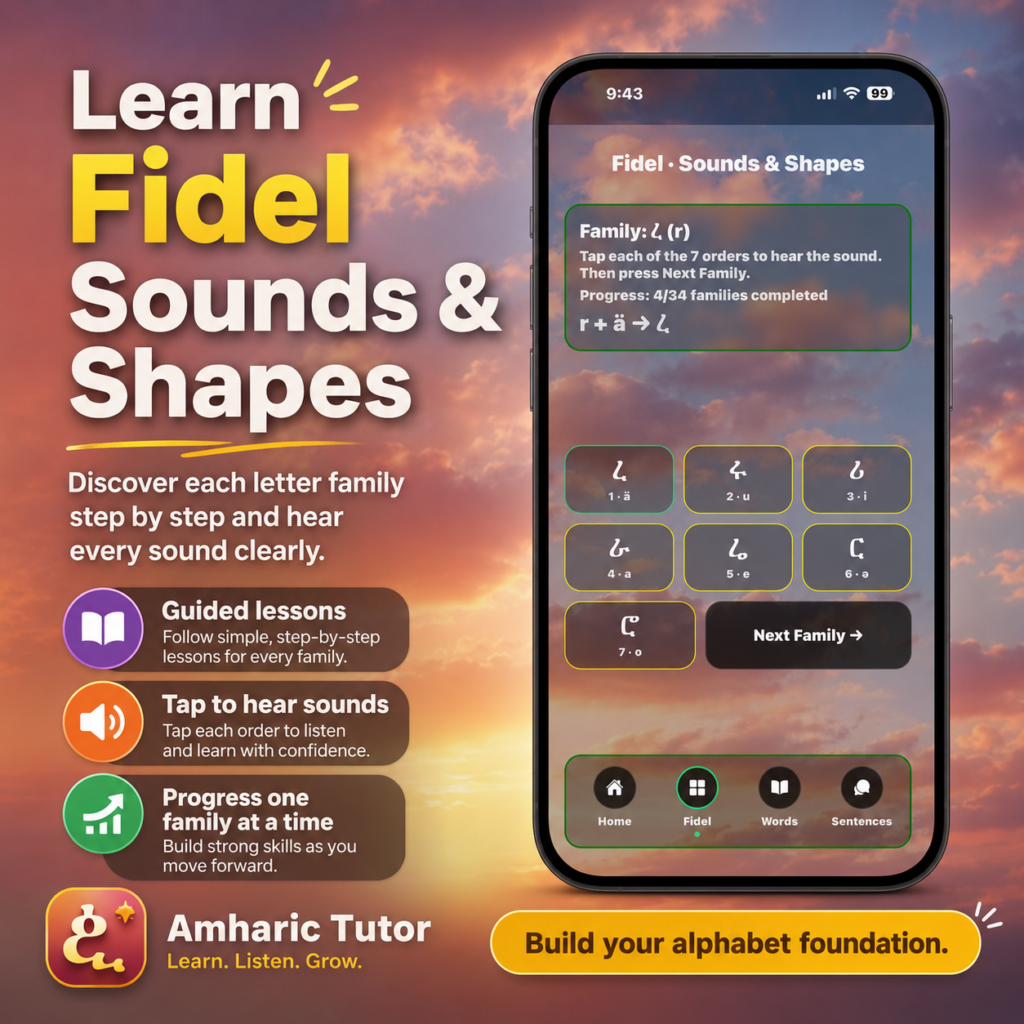
The Fidel section helps learners build a strong foundation in Amharic by introducing the sounds, shapes, and patterns of the Amharic writing system. Through organized lessons, users can explore Fidel families step by step and become familiar with how each symbol changes across the different syllable forms. This gives beginners the confidence they need to recognize, read, and pronounce Amharic characters.
After the Fidel lesson, learners can practice with two interactive exercise types. Together, these lessons and exercises make learning the Amharic alphabet clear, engaging, and practical.
The first set of Fidel exercises helps users recognize syllables and Amharic numerals through a game-like activity that strengthens visual memory and character recognition.
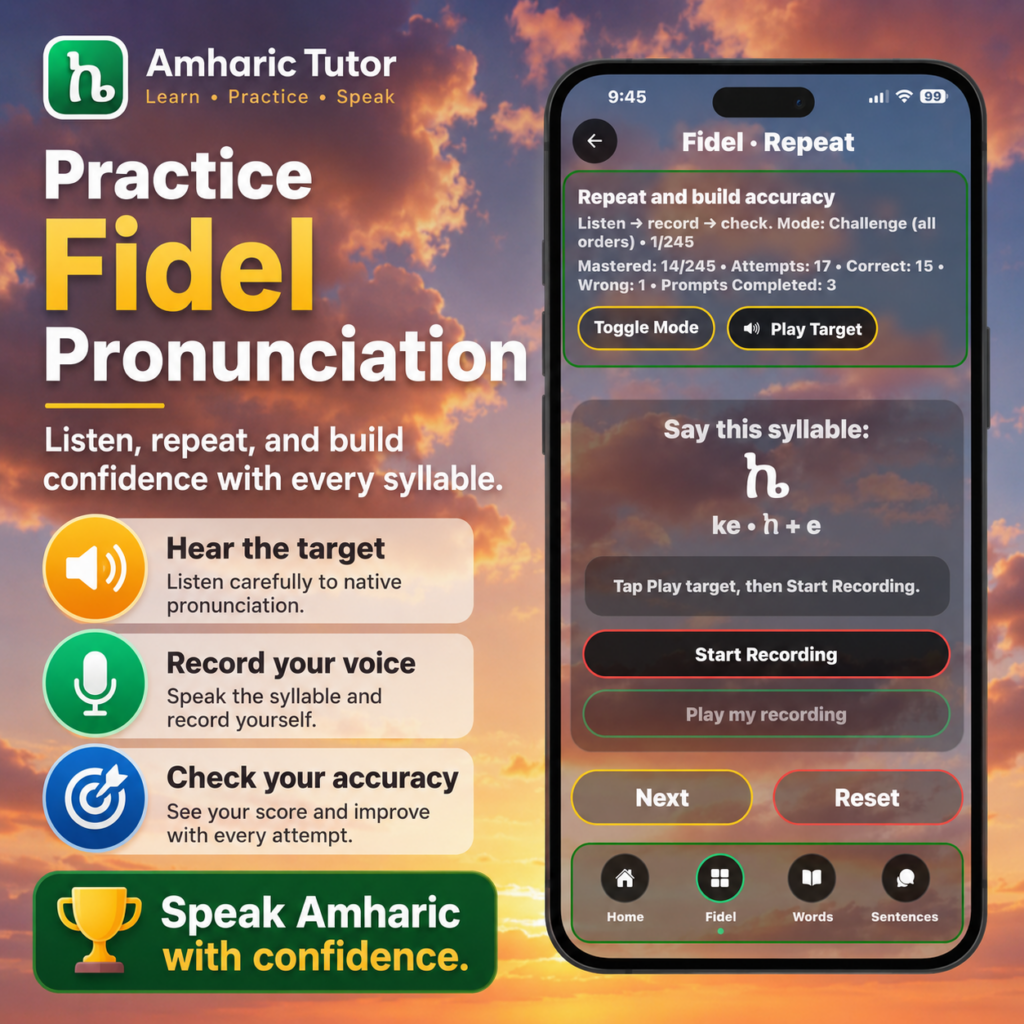
The second set of Fidel exercises focuses on pronunciation, allowing learners to listen to Fidel sounds and practice saying the syllables themselves.
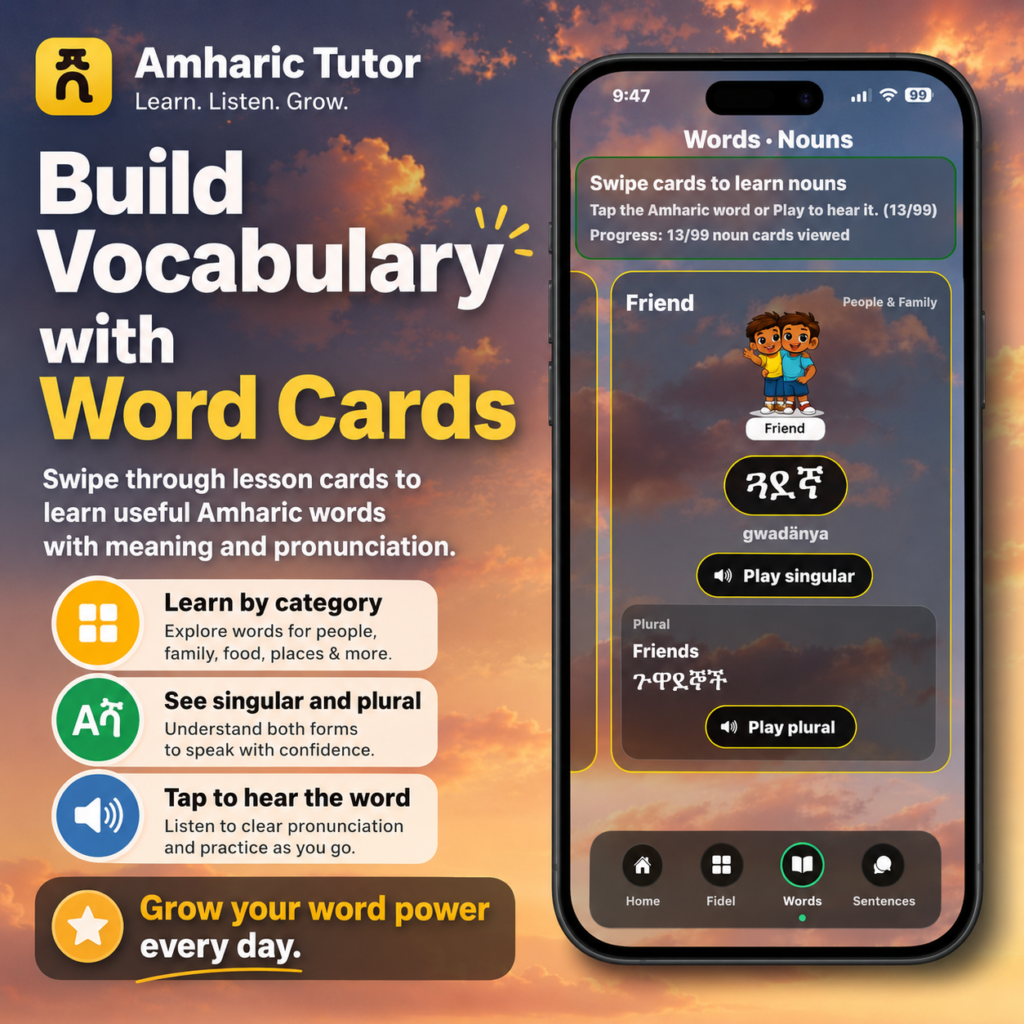
The Words section helps learners expand their Amharic vocabulary through easy-to-follow lesson cards. Words are grouped by type, including nouns, pronouns, adverbs, adjectives, and other important word categories, so learners can build vocabulary in an organized and meaningful way. Each word card introduces individual words clearly, helping users connect the written Amharic form with its meaning and pronunciation.
The exercises in this section reinforce vocabulary through listening and speaking practice. This combination of lessons, recognition practice, and pronunciation training helps learners move from simply seeing words to understanding and using them.
In this set of exercises, learners listen to a word’s pronunciation and identify the correct word from a selection of choices.
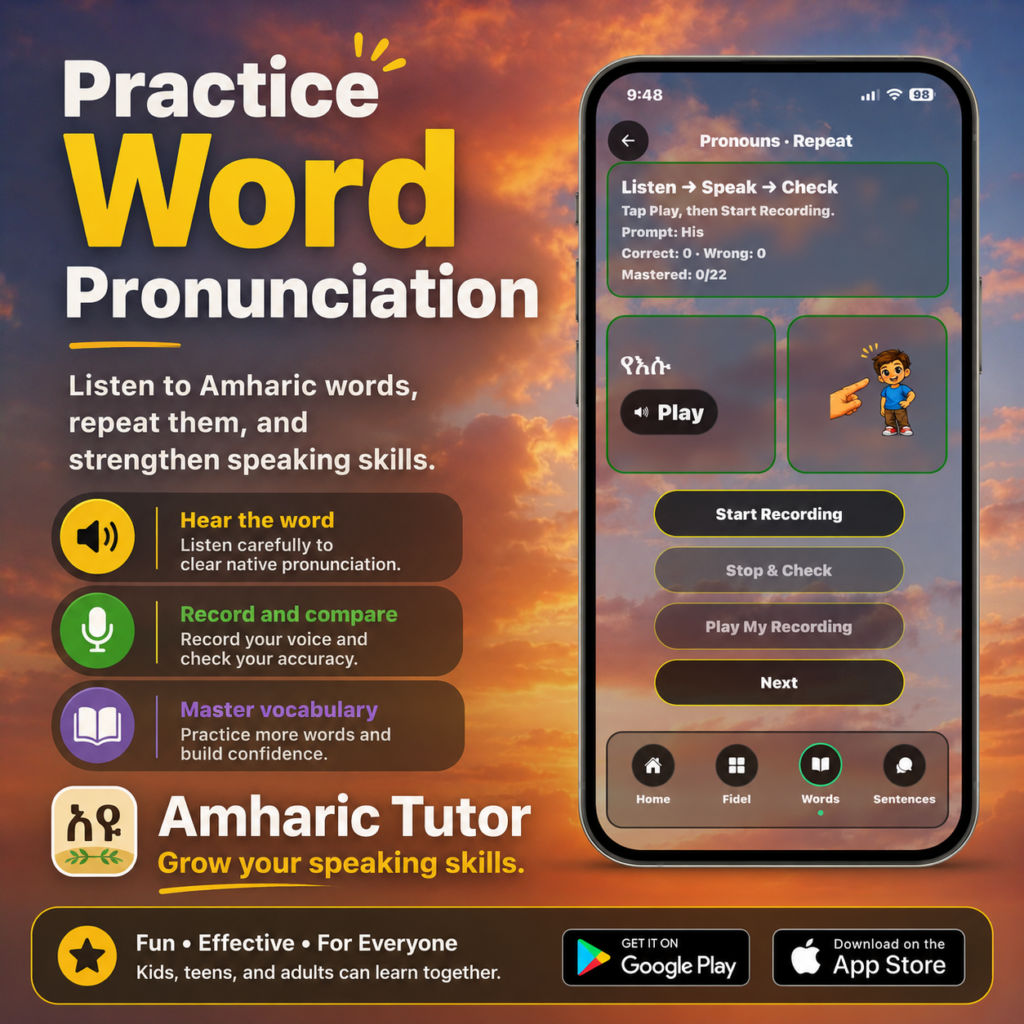
In the second set of exercises for words, users practice pronouncing words themselves, helping improve speaking confidence and listening accuracy.
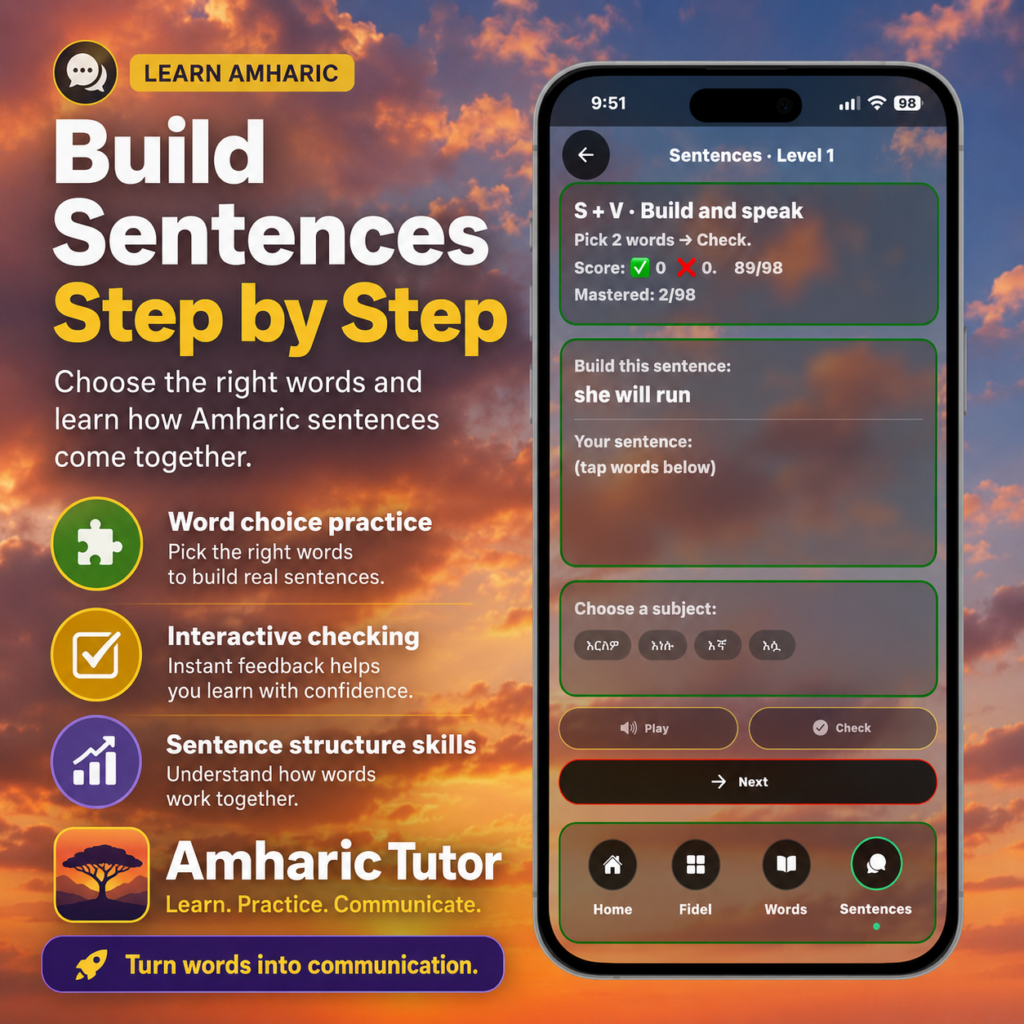
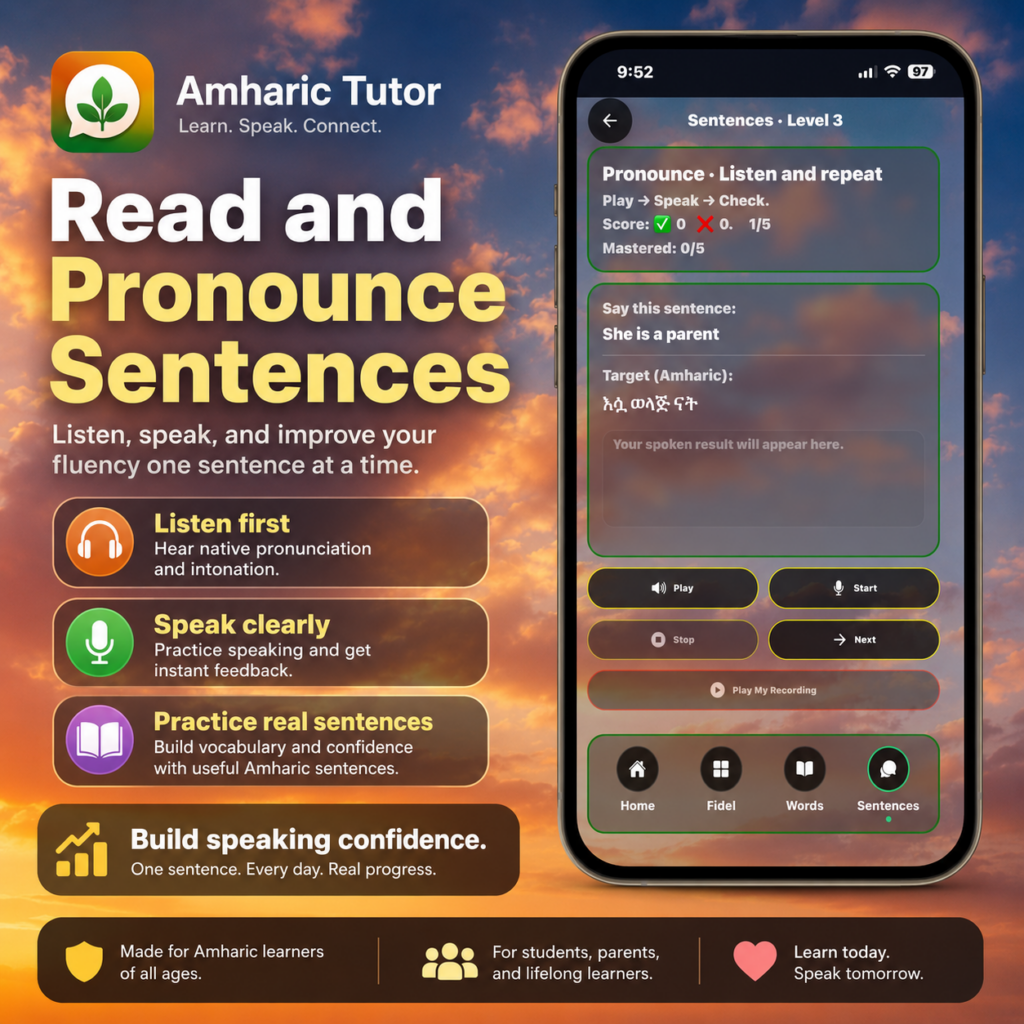
The Sentences section helps learners move beyond individual words and begin understanding how Amharic sentences are constructed. Lessons guide users from simple sentence structures to progressively more complex patterns, showing how subjects, verbs, objects, descriptions, time expressions, place phrases, and other sentence parts work together. This gives learners a practical path for understanding how Amharic is used in real communication. Sentence practice includes two interactive exercise types. By combining structured lessons with game-like sentence building and pronunciation practice, Amharic Tutor helps learners turn vocabulary into meaningful communication.
The first set of sentence execises asks learners to build increasingly complex sentences from a given set of word choices, helping them understand word order and sentence structure through active practice.
The second set of sentence exercises focuses on reading and pronouncing full sentences, giving learners the opportunity to strengthen fluency, speaking confidence, and comprehension.